
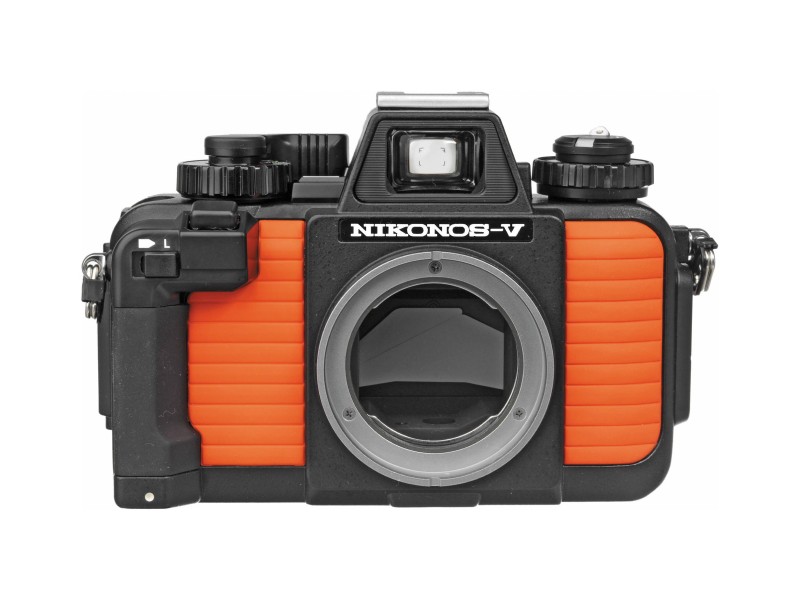
Nikon Cameras Nikonos V
1984, June
The Nikonos V, released in June 1984, is the most refined and popular model in Nikon's classic 35mm amphibious film camera series, remaining in production until 2001. It built upon the electronic design of the IV-A but addressed its shortcomings, offering both aperture-priority autoexposure and full manual shutter speed control.
Key Features and Specifications
Exposure Control: It features an electronically controlled shutter with aperture-priority autoexposure (AE) and, crucially, a full manual mode with quartz-controlled speeds of 1/30, 1/60, 1/125, 1/250, 1/500, and 1/1000 sec.
Shutter: A vertical-travel metal focal plane shutter is used. For battery failure contingency, it includes a mechanical M90 (1/90 sec) speed and Bulb (B) mode that operate without power.
Metering: The camera uses a built-in TTL (Through-The-Lens) center-weighted light meter with an SPD cell, offering metering from ISO 25 to 1600.
Flash System: A significant improvement was the implementation of true TTL automatic flash exposure control when used with dedicated flash units like the SB-102 and SB-103.
Viewfinder: The large, bright viewfinder was designed for easy viewing with a dive mask, featuring LED indicators for shutter speeds, over/under-exposure warnings, and a flash-ready signal.
Construction: The robust die-cast aluminum alloy body is sealed with O-rings, giving it a depth rating of 50 meters (165 feet). The camera was available in vibrant orange or olive green colors.
Film Loading: It maintained the convenient hinged back for film loading introduced with the IV-A.
The Nikonos V is renowned for its durability and versatility, favored by professional and amateur photographers for use in challenging environments like the surf, rain, and underwater, making it a "legendary" adventure camera.